

Step into any London gentlemen’s club or specialist tobacconist, and you’ll discover a world where time slows down and tradition reigns supreme. The UK’s cigar culture has flourished for centuries, evolving from Victorian smoking rooms to modern-day lounges where enthusiasts gather to savour premium tobacco. Whether you’re contemplating your first Cuban or you’re a seasoned aficionado seeking new experiences, navigating the British cigar landscape requires understanding both its rich heritage and contemporary regulations.
We’ve witnessed remarkable changes in the UK cigar market over recent years. Even though stricter regulations and rising duties, demand for quality cigars continues to grow, with specialist retailers reporting increased interest from younger demographics seeking authentic luxury experiences. From the cobbled streets of Edinburgh to the bustling markets of Birmingham, cigar appreciation has become more accessible than ever, though knowing where to look, and what to look for, makes all the difference.
Key Takeaways
- Quality cigars UK enthusiasts prefer include hand-rolled options ranging from £15-30, offering 45-90 minutes of complex flavours compared to machine-made alternatives.
- UK cigar duty stands at £327.92 per kilogram plus 20% VAT, with personal import limits of 50 cigars from EU countries and 25 from non-EU nations.
- Specialist tobacconists like James J. Fox in London and regional shops offer expertise that online retailers can’t match, whilst proper humidor storage at 70% humidity is essential in British climate.
- The Robusto size dominates British humidors for its 45-minute smoking time that suits UK weather, whilst newer enthusiasts increasingly favour shorter formats like Petit Coronas.
- Cigars UK regulations require buyers to be 18 or older, with retailers using strict age verification systems and facing penalties up to £2,500 for underage sales.
- British cigar culture has evolved from Victorian smoking rooms to modern lounges where proper etiquette includes patient lighting techniques and respectful social conduct.
Understanding Cigar Types and Classifications

Diving into the world of cigars can feel overwhelming at first. We’re confronted with countless brands, origins, and terminology that seems designed to confuse rather than clarify. But here’s the thing: once you grasp the fundamentals, everything else falls into place.
Hand-Rolled vs Machine-Made Cigars
The distinction between hand-rolled and machine-made cigars isn’t just about craftsmanship, it’s about the entire smoking experience. Hand-rolled cigars, often called “premium” or “long-filler“ cigars, are constructed by skilled torcedores who carefully select and position each tobacco leaf. These artisans can produce perhaps 100-150 cigars daily, ensuring consistent draw and burn throughout.
Machine-made cigars, on the other hand, use homogenised tobacco leaf (HTL) wrappers and short-filler tobacco. They’re produced at rates exceeding 5,000 units per day. We’re not suggesting they’re inferior, brands like Café Crème and Hamlet have loyal followings across Britain. They serve a different purpose: quick, convenient smokes that don’t require the ritual and time investment of premium cigars.
The price difference tells its own story. A quality hand-rolled robusto might set you back £15-30 in the UK, whilst machine-made options typically range from £2-8. But here’s what many newcomers don’t realise: that premium cigar offers 45-90 minutes of complex, evolving flavours, making the per-minute cost surprisingly reasonable.
Popular Cigar Sizes and Shapes
Forget everything you think you know about “bigger is better.“ In the cigar world, size affects flavour concentration, smoking time, and the overall experience. The UK market favours certain vitolas (sizes) that suit our climate and smoking habits.
The Robusto (5″ x 50 ring gauge) dominates British humidors for good reason. It delivers full flavour in about 45 minutes, perfect for our unpredictable weather. The Corona (5.5“ x 42) remains a classic choice, offering elegance and balance that pairs beautifully with afternoon tea or evening whisky.
We’re seeing increased interest in Petit Coronas and Short Robustos, particularly among urban smokers who need shorter smoking times. These formats pack surprising complexity into 20-30 minute experiences. Meanwhile, the Churchill (7″ x 47) retains its status as the celebration cigar, though finding suitable outdoor smoking time in British weather requires planning.
Ring gauge affects more than just appearance. Thicker cigars burn cooler and slower, allowing complex blends to develop gradually. Thinner gauges concentrate flavours but require more attention to avoid overheating. It’s why we often recommend newcomers start with medium ring gauges (46-50) before exploring extremes.
UK Cigar Laws and Regulations

Navigating UK cigar regulations feels like solving a particularly British puzzle, complex, occasionally frustrating, but eventually manageable with proper knowledge. We’ve watched these laws evolve dramatically since 2007’s smoking ban, creating a unique landscape that differs markedly from continental Europe or the Americas.
Age Restrictions and Purchase Requirements
The law is unambiguous: you must be 18 or older to purchase tobacco products in the UK. But enforcement has tightened considerably. Online retailers now employ age verification systems that go beyond simple tick-boxes. Expect to provide driving licence or passport details, with some retailers using third-party verification services that cross-reference electoral rolls and credit databases.
Physical shops face hefty penalties for underage sales, up to £2,500 per incident. We’ve noticed many specialist tobacconists now request ID from anyone appearing under 25, adopting the “Challenge 25” policy common in alcohol retail. Some premium cigar lounges maintain membership systems partly to ensure age compliance whilst creating exclusive atmospheres.
What catches many visitors off-guard is the prohibition on proxy purchases. Buying cigars for someone underage carries the same penalties as direct sales. Even gifting cigars requires consideration, that birthday present for your nephew needs waiting until he’s legally old enough.
Import Duties and Taxation
Here’s where things get expensive. UK tobacco duty on cigars currently stands at £327.92 per kilogram, plus 20% VAT on the total cost (including duty). A box of 25 premium robustos weighing 350 grams faces approximately £115 in duty alone, before VAT.
Personal imports add another layer. Returning from EU countries, we’re allowed 50 cigars duty-free. From non-EU nations, that drops to just 25. Exceed these limits, and you’ll pay UK duty rates on the entire quantity, not just the excess. We’ve heard countless stories of travellers learning this expensive lesson at Heathrow.
Online purchases from overseas retailers seem tempting given price differences. But here’s the catch: HMRC actively monitors international parcels. Your “bargain” Cuban cigars from Switzerland will likely incur duty, VAT, and handling fees that eliminate any savings. Worse, some shipments get destroyed if proper declarations aren’t made.
Brexit introduced additional complications. Northern Ireland follows different rules due to the Protocol, whilst Gibraltar, traditionally a popular cigar-shopping destination, now falls under third-country regulations. Even duty-free shops at UK airports have adjusted prices to reflect these new realities.
Where to Buy Quality Cigars in the UK

Finding exceptional cigars in the UK isn’t difficult, if you know where to look. We’ve explored countless tobacconists from Cornwall to the Scottish Highlands, and the variety might surprise those who assume British cigar culture died with the smoking ban.
Specialist Tobacconists and Shops
London remains the epicentre of British cigar retail. James J. Fox on St James’s Street has served aficionados since 1787, maintaining one of Europe’s finest walk-in humidors. Their museum downstairs showcases Churchill’s cigar invoices alongside centuries of tobacco history. Expect to pay premium prices, but the expertise and selection justify the cost.
Sautter Cigars in Mayfair offers a more contemporary experience without sacrificing tradition. Their Mount Street shop features a stunning humidor room and knowledgeable staff who’ll spend hours discussing flavour profiles without pressure to purchase. We particularly appreciate their regular tasting events, where £30 tickets include samples worth double that.
Outside London, Prestige Cigars UK operates multiple Scottish locations with impressive selections. Their Edinburgh shop on George Street rivals any capital establishment. Birmingham’s Cigars Ltd punches above its weight, whilst Manchester’s The Vintage Cigar Company combines retail with a proper smoking lounge, increasingly rare in today’s regulatory environment.
Regional specialists often surprise us. Chester’s Turmeaus stocks limited editions you won’t find elsewhere. Bristol’s Havana House maintains relationships with smaller Caribbean producers. These shops survive through expertise and service that online retailers can’t match.
Online Retailers and Delivery Options
The digital transformation hasn’t bypassed cigar retail. Prestige Cigars UK dominates online sales with an inventory exceeding most physical shops. Their website features detailed tasting notes, professional photography, and honest condition reports for vintage cigars. Standard delivery runs £4.95, but orders over £50 ship free.
Hacico operates from Germany but ships throughout the UK. Even though Brexit complications, their prices often beat UK retailers even after shipping costs. They specialise in samplers and singles, perfect for exploration without committing to full boxes. Just remember those import duty considerations we mentioned earlier.
We’ve found Prestige Cigars UK particularly reliable for regular orders. Their subscription service delivers monthly selections tailored to your preferences, whilst their auction site offers opportunities to acquire rare and vintage cigars at competitive prices.
Delivery requires consideration. Most retailers use specialist courier services that ensure proper handling and age verification. Some offer temperature-controlled shipping during summer months, worth the extra £10-15 for premium cigars. We always specify delivery dates to avoid packages sitting in depots over weekends.
Proper Cigar Storage and Humidor Essentials
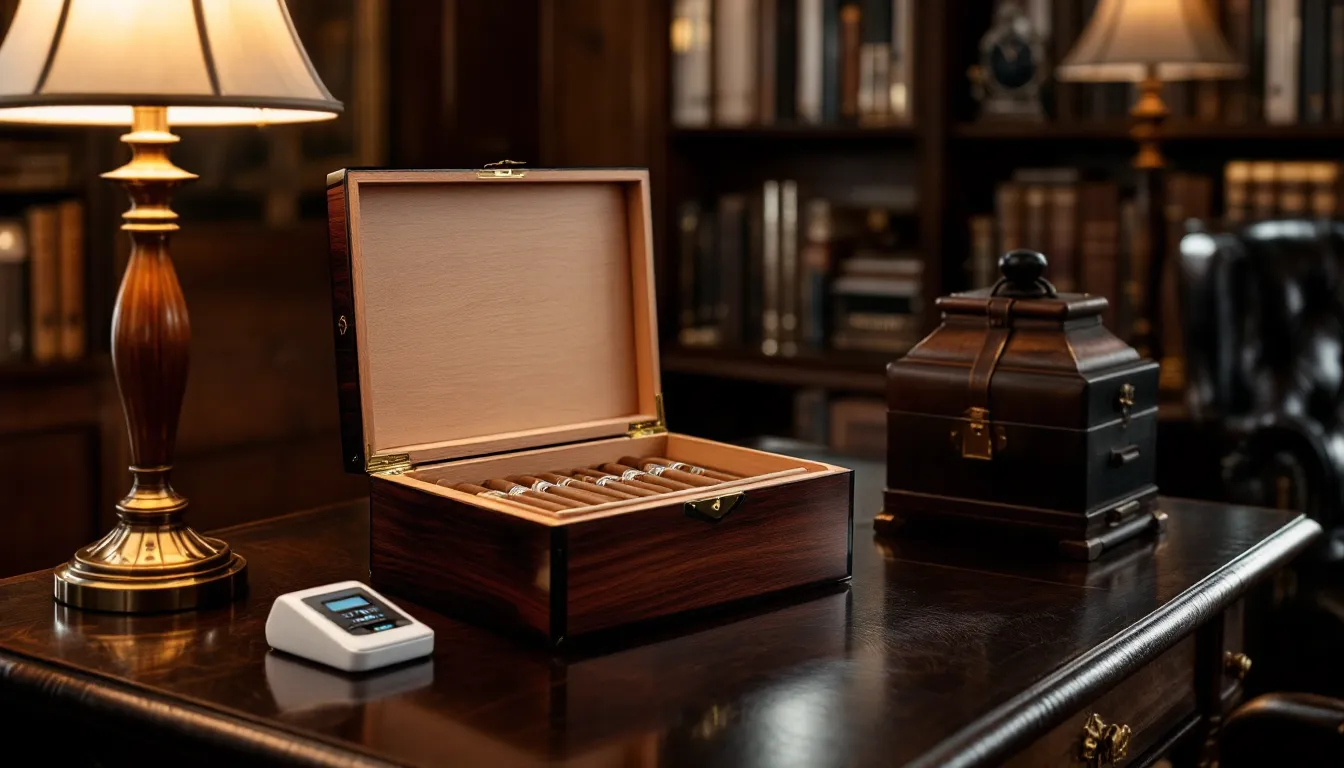
British weather poses unique challenges for cigar storage. Our damp winters and (occasionally) warm summers create fluctuations that can ruin premium tobacco within weeks. We’ve learned through expensive mistakes that proper storage isn’t optional, it’s essential for anyone serious about cigars.
Selecting the Right Humidor
Your first humidor purchase sets the tone for your entire collection. Desktop humidors dominate the UK market, with Spanish cedar-lined boxes holding 25-100 cigars suiting most enthusiasts. We recommend starting with 50-cigar capacity even if you currently own just a few. Collections grow faster than expected, and overcrowding prevents proper air circulation.
Construction quality matters more than aesthetics. Solid wood humidors with Spanish cedar lining regulate humidity naturally whilst imparting subtle flavours. Those attractive glass-top models? They look impressive but struggle maintaining consistent conditions. We’ve seen too many collections ruined by temperature spikes from direct sunlight through glass lids.
Price ranges vary wildly. Entry-level humidors from Adorini or Germanus (£50-150) serve perfectly well with proper setup. Mid-range options like Davidoff or S.T. Dupont (£200-500) offer superior seals and hardware. High-end humidors become furniture pieces, beautiful but unnecessary for storage alone.
For serious collectors, electric humidors eliminate guesswork. Units from Liebherr or Swisscave (£500-2000) maintain precise temperature and humidity automatically. Yes, they’re expensive. But considering the value of cigars they protect, we consider them worthwhile investments.
Maintaining Optimal Humidity Levels
The golden rule hasn’t changed: 70% relative humidity at 70°F (21°C). But achieving this in British homes requires understanding and adjustment. Our central heating drops winter humidity below 30%, whilst summer can push past 80%. Neither extreme works for cigars.
Seasoning new humidors remains crucial yet often rushed. We spend two weeks preparing new humidors using distilled water and patience. Skip this step, and cedar will steal moisture from your cigars. Those “pre-seasoned“ humidors? Marketing nonsense. Do it properly yourself.
Humidification devices evolved beyond traditional sponges. Boveda packs revolutionised storage with two-way humidity control, they add or remove moisture automatically. We use 69% packs rather than 72% because British humidors typically run slightly high. Each pack lasts 2-3 months and costs about £4. Simple, effective, reliable.
Digital hygrometers replaced analogue versions for good reason. Accuracy matters when protecting hundreds of pounds worth of cigars. We calibrate ours quarterly using the salt test (Google it, every cigar smoker should know this). The Xikar Digital Hygrometer (£25) offers Bluetooth connectivity, sending alerts when conditions stray.
Cigar Etiquette and Smoking Techniques

Cigar smoking carries unwritten rules that separate enthusiasts from novices. We’re not talking about snobbery, though that certainly exists, but rather practices that enhance everyone’s enjoyment. Master these fundamentals, and you’ll feel comfortable in any humidor lounge or private club.
Cutting and Lighting Methods
The cut makes or breaks your smoking experience. Too shallow, and you’ll struggle with draw. Too deep, and the wrapper unravels. We position cutters just above the shoulder where the cap’s curve begins, usually 2-3mm from the end. Guillotine cutters remain most popular, though V-cutters concentrate flavours for fuller-bodied cigars.
Here’s what nobody tells beginners: test the draw before lighting. A gentle pull should feel like sipping a thick milkshake through a straw. Too tight? Cut slightly deeper. Too loose? You’ve probably cut too much, unfortunately irreversible.
Lighting requires patience most British smokers lack. Butane torches work best (never use petrol lighters, the fuel taints tobacco). We toast the foot first, rotating the cigar above the flame without touching it. Watch for even glowing across the entire surface before taking that first draw. Rush this process, and you’ll taste nothing but char for the first inch.
Cedar spills add theatre whilst improving flavour. These thin cedar strips light easily and burn neutrally. Many premium cigars include them in packaging. We keep a supply handy, lighting a £30 cigar with a 10p spill feels appropriately ceremonial.
Social Etiquette and Club Culture
British cigar lounges maintain certain expectations, whether stated or implied. We don’t wave cigars around like props or blow smoke at others. Sounds obvious? You’d be surprised. Ashing follows its own protocol, let ash build to about an inch before gently rolling it off. Tapping like a cigarette shows inexperience.
Conversation topics in cigar lounges tend toward the contemplative rather than confrontational. Politics and religion appear, but heated arguments don’t. We’ve noticed an unspoken agreement: this is neutral ground where city traders and taxi drivers share equal standing, united by appreciation for good tobacco.
Sharing cigars follows gift-giving rules. Offer your best, never your worst. If someone shares a premium stick, reciprocate eventually, not necessarily immediately, but within reasonable time. Accepting expensive cigars repeatedly without reciprocation marks you as a “mooch,“ virtually guaranteeing social exclusion.
Most importantly: never judge another’s choice. That businessman smoking a machine-made cigarillo might be squeezing enjoyment into a packed schedule. The youngster with the flavoured cigar? Perhaps they’re exploring before committing to traditional options. We’ve learned that cigar appreciation isn’t about superiority, it’s about shared pleasure in life’s finer moments.
Conclusion
The UK cigar scene thrives even though, or perhaps because of, the challenges it faces. We’ve adapted to regulations, embraced online retail, and maintained traditions whilst welcoming newcomers. What started as Victorian gentleman’s pursuit has evolved into an inclusive community where knowledge matters more than background.
Your cigar journey begins with that first proper purchase from a specialist tobacconist. Trust their recommendations, invest in basic storage, and don’t rush the experience. We’ve watched too many potential enthusiasts give up after buying petrol station cigars and wondering why people bother. Start right, and you’ll understand why Churchill reportedly smoked 250,000 cigars in his lifetime.
The future looks surprisingly bright for UK cigar culture. Younger smokers bring fresh perspectives whilst respecting established traditions. Online communities share knowledge that once required years to acquire. And even though regulatory pressures, quality and variety continue improving. Whether you’re seeking contemplative solitude or social connection, cigars offer both, just remember to check the weather forecast first.
Frequently Asked Questions
What’s the legal age to buy cigars in the UK?
You must be 18 or older to purchase cigars in the UK. Retailers often operate a ‘Challenge 25’ policy, requesting ID from anyone appearing under 25. Online retailers use age verification systems requiring driving licence or passport details.
How much duty do I pay on cigars brought into the UK?
UK tobacco duty on cigars is £327.92 per kilogram plus 20% VAT. From EU countries, you can bring 50 cigars duty-free, whilst from non-EU nations it’s just 25. Exceed these limits and you’ll pay duty on the entire quantity.
Where can I smoke cigars legally in the UK?
Since the 2007 smoking ban, you can smoke cigars outdoors, in private residences, designated hotel rooms, and specialist cigar lounges with proper ventilation systems. Some tobacconists maintain smoking lounges, though these are increasingly rare due to regulations.
What’s the best humidity level for storing cigars in the UK?
Maintain 70% relative humidity at 21°C (70°F) for optimal storage. British homes require careful monitoring as central heating drops winter humidity below 30%, whilst summers can exceed 80%. Using 69% Boveda packs works well as UK humidors typically run slightly high.
How long do Cuban cigars last in UK storage conditions?
Properly stored Cuban cigars can age beautifully for decades in the UK. With consistent 70% humidity and 21°C temperature in a quality humidor, premium Cubans improve for 5-10 years and remain smokeable for 20+ years, developing complex, refined flavours over time.


